The Enneagram Triads
Enneagram Triads are a core part of my work. When working with teams, I love using the Triads as a way to people see ways that they have something in common with each of the other types, especially if it’s the type of a person they have had some conflict with previously.
To talk about the Triads, the best place to begin is with the Enneagram Symbol.
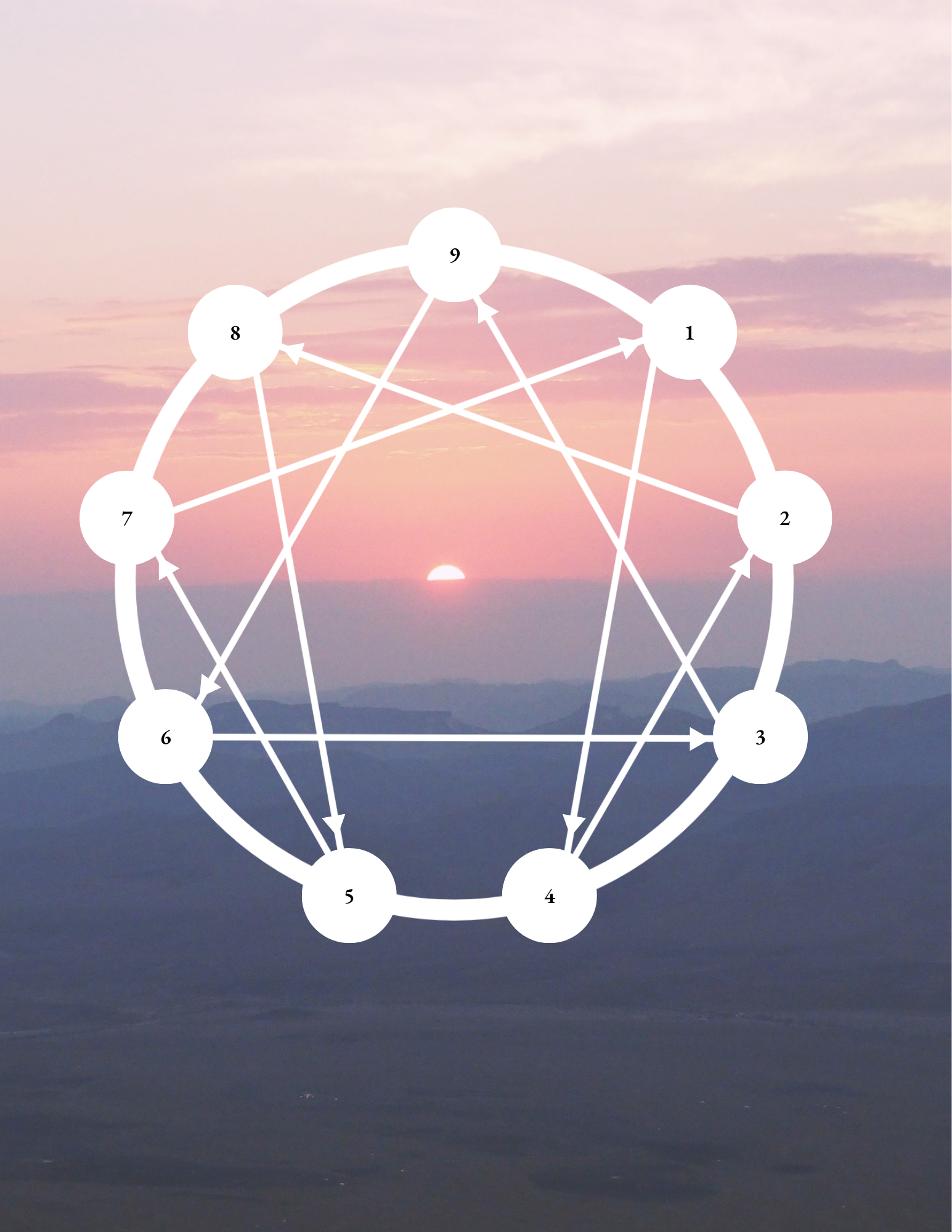
The Enneagram Symbol is a visual picture of the energy and interaction of the Types. The circle reminds us we are all connected.
To some extent, we each hold and display all nine Types. However, we rest in one number as our core Type. Our Enneagram Type is the primary lens through which we experience the world. When we know our Type, we uncover and explore what we are afraid of, what we desire, and what makes us feel vulnerable. Knowing our Enneagram Type helps us name our shadows with compassion and take steps to live more deeply into our gifts.
Enneagram Types connected to our core Type by arrow lines reflect our tendency to energetically “move” in different circumstances. In times of stress, we tend to be “pulled” with the arrow, compelled toward behaving like the Type at the end of that arrow line. In relaxed or secure states, we tend to let our guard down and open to the energy of the Type at the end of the arrow line pointing towards our Type. Like our core Type, the Enneagram Types at the end of our arrow lines are important parts of who we are. In fact, learning to integrate those two Types in times other than stress and security is a key component of moving forward in wholeness.
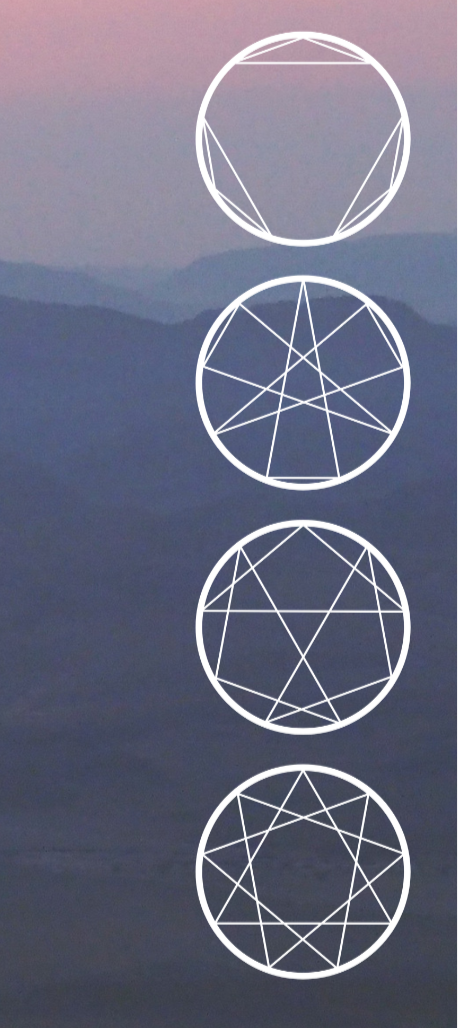
When we remove the inner arrow lines, there is space to draw inner triangles that divide the 9 Types into four distinct Triads. These Triads describe ways that we interact with the world, revealing places of both tension and connection. Through the Triads, all Enneagram Types have at least one place of commonality with each of the other Types.
The Intelligence Center Triads describe how we perceive and process the world. Types 8, 9, and 1 are in the Gut Center Triad, Types 2, 3, and 4 are in the Heart Center Triad, and Types 5, 6, and 7 are in the Head Center Triad.
Read the full breakdown of this Triad here.
The Energy Triads (otherwise known as Hornevian Groups or Social Stances) describe how we move and get needs met in the world. Types 8, 3, and 7 are in the Active Energy Triad, Types 9, 4, and 5 are in the Receptive Energy Triad, and Types 1, 2, and 6 are in the Balancing Energy Triad.
Read the full breakdown of this Triad here.
The Harmonic Triads describe how we react to and cope with the world. Types 8, 4, and 6 are in the Reactivity Triad, Types 9, 2, and 7 are in the Positivity Triad, and Types 1, 3, and 5 are in the Competency Triad.
Read the full breakdown of this Triad here.
The Collaboration Triads (otherwise known as Harmony Triads or Object Relation Triads) describe how we relate to and provide for the world. Types 8, 2, and 5 are in the Relationalist Triad, Types 9, 3, and 6 are in the Pragmatist Triad, and Types 1, 4, and 7 are in the Idealist Triad.
Read the full breakdown of this Triad here.
Enneagram Triads give us a beautiful opportunity to see how we are unique and complex individuals while, at the same time deeply connected to each of the other Enneagram Types. Notice how each Enneagram Type can be described according to the Triadic layers. Does this bring clarity to how you see yourself or someone else?
Type 8s are relational, reactive, active gut intelligence types.
Type 9s are pragmatic, positive, receptive gut intelligence types.
Type 1s are idealistic, competent, balancing gut intelligence types.
Type 2s are relational, positive, balancing heart intelligence types.
Type 3s are pragmatic, competent, active heart intelligence types.
Type 4s are idealistic, reactive, receptive heart intelligence types.
Type 5s are relational, competent, receptive head intelligence types.
Type 6s are pragmatic, reactive, balancing head intelligence types.
Type 7s are idealistic, positive, active head intelligence types.
Want to explore how Enneagram Triads could be used with your team? Check out my coaching opportunities or book a consultation call.